Spicy Mango Chutney
By Rhonda in 1994, Northern Territory
- Serve size - Approximately ten 375g jars
- Prep time - 30 minutes
- Cook time - 1.5 hours
Equipment
- Stove
- Preserving pan (Large pot with lid - minimum 4.8 litre)
- Chopping board
- Cooks knife (or any knife for chopping)
- Kitchen scales
- Cup measurers
- Liquid measuring jug
- Wooden (or plastic) stirring spoon
Ingredients
- 500g ripe turpentine mangoes, cut into 1cm cube1
- 1.5kg ripe eating mangoes, cut into 1cm cubes 2
- 500g just ripe eating mangoes, cut into 1cm cubes3
- 350ml white vinegar
- 350 ml malt vinegar4
- 250g raisins, coarsely chopped
- 125g pitted dates, coarsely chopped
- 65g ginger, grated5
- ¼ cup birds eye chilli with seeds in, chopped
- 6x long red chillies, sliced lengthwise with seeds removed6
- 250g Granny Smith apples, peeled and cored, cut into 1cm cubes
- 250g brown onion, chopped coarsely
- 375g white sugar
- 375g brown sugar7
- Salt to taste8
Ingredient notes
-
Turpentine, or any stringy variety of mango. If you can’t get Turpentine mangoes, it is ok to use
Bowen
or KP (Kensington Pride) mangoes but it’s a better chutney if you have a few stringy mangoes in the
chutney as it holds together much better and isn’t so runny.
- Kensington Pride or Bowen mangoes
-
To be added to cooking half an hour before you finish the cooking. This is a presentation trick for
the
cooking competitions, so that squares of light coloured mango can be clearly seen in the darker
coloured
chutney. They must be cooked for at least 30 minutes to ensure they are fully cooked and don’t cause
fermentation when bottled.
- Do not use brown vinegar as it has too much acid.
-
Peeled and grated fresh ginger, if not available, bottled crushed ginger is acceptable.
-
To be placed in the cooking chutney 30 minutes before finished cooking. When bottling, the chillies
should eb pushed to the outside of the jar for presentation.
-
Don’t use dark brown sugar as it makes the colour of the chutney too dark and it doesn’t look as
appetizing.
- Don’t use too much salt as the flavour of the chutney gets smoother with maturity.
d
Method
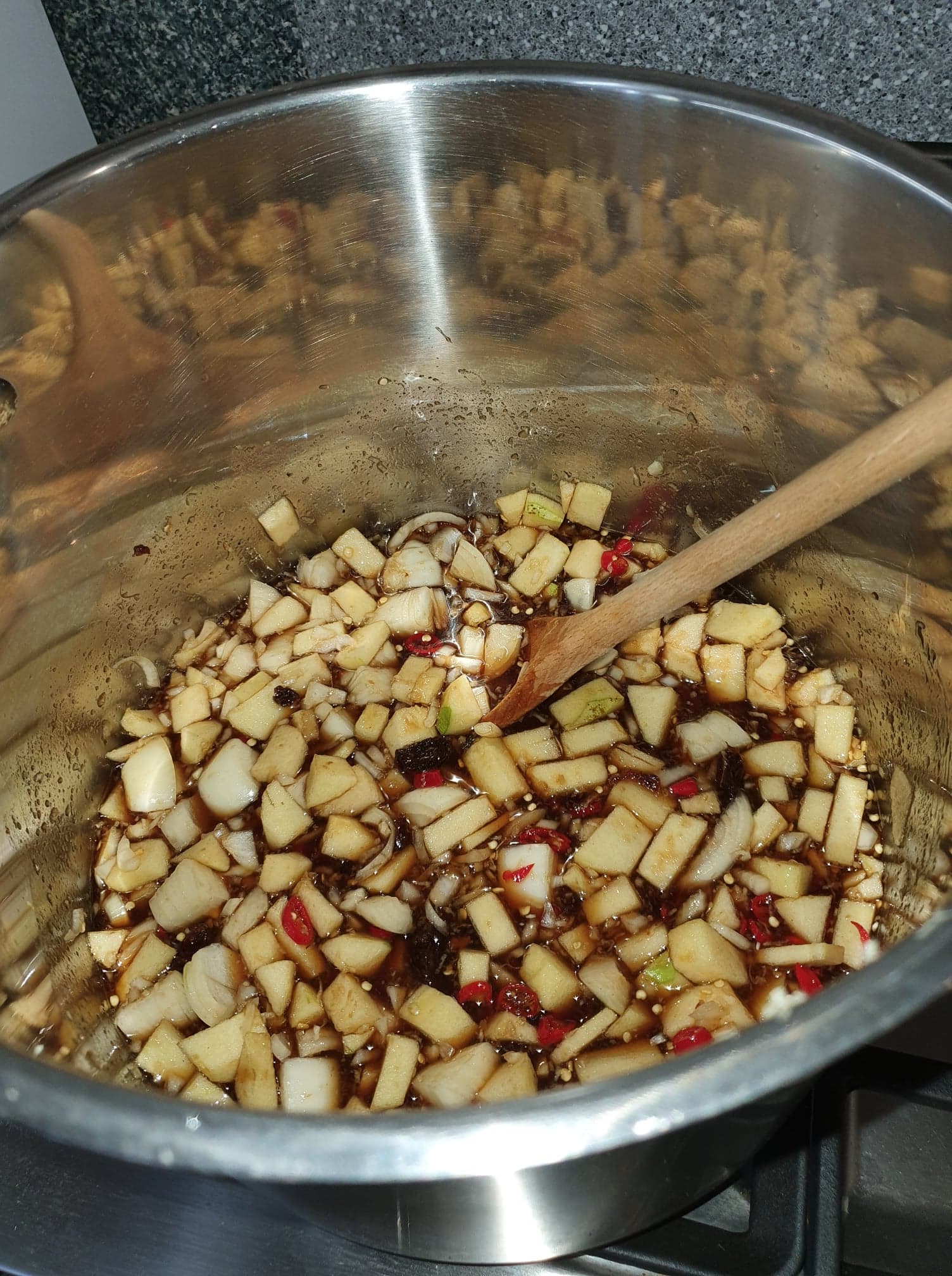
Step 1
Add all the ingredients except the mangoes into a large preserving pan, put the lid on as you want to
keep the steam in the boiler for the liquid at this stage. Bring to the boil and then reduce to a
simmer for approximately 20 minutes to half an hour to soften the apples etc. Stir occasionally to
make sure all the sugar has dissolved.
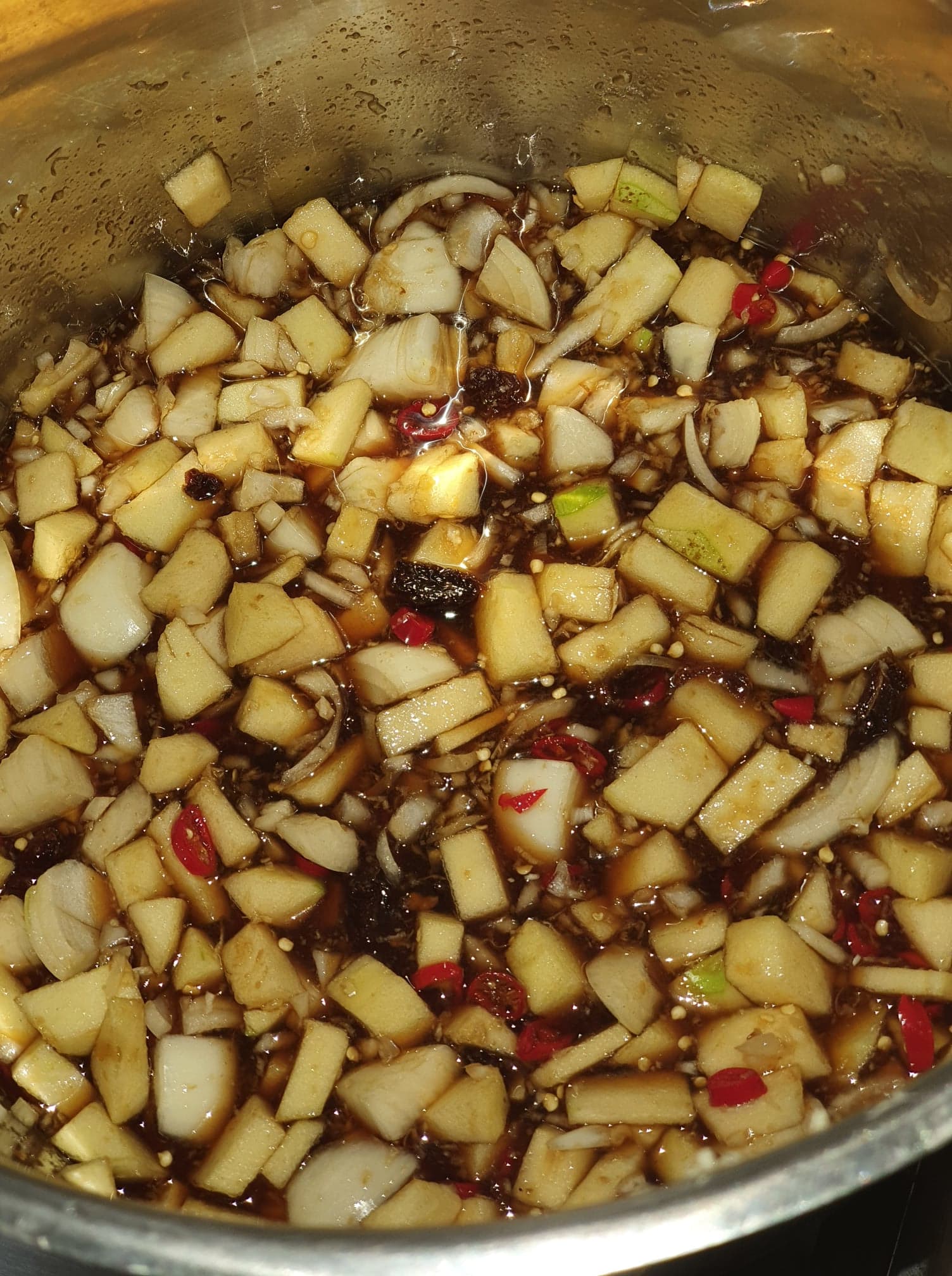
Step 2
Add 2 kg only of the ripe chopped mangoes and simmer on low heat with the lid off from now on as you need
some of the liquid to evaporate to help the chutney get thicker, stirring approximately every 5 minutes
to prevent it from catching at the bottom of the boiler, until thickened. This should take about a
further 1 hour perhaps a little longer depending on the type of stove you are using. You have to cook it
slowly, so be patient and stir regularly otherwise it will stick as the chutney has a high sugar content
with all the fruits and sugars.
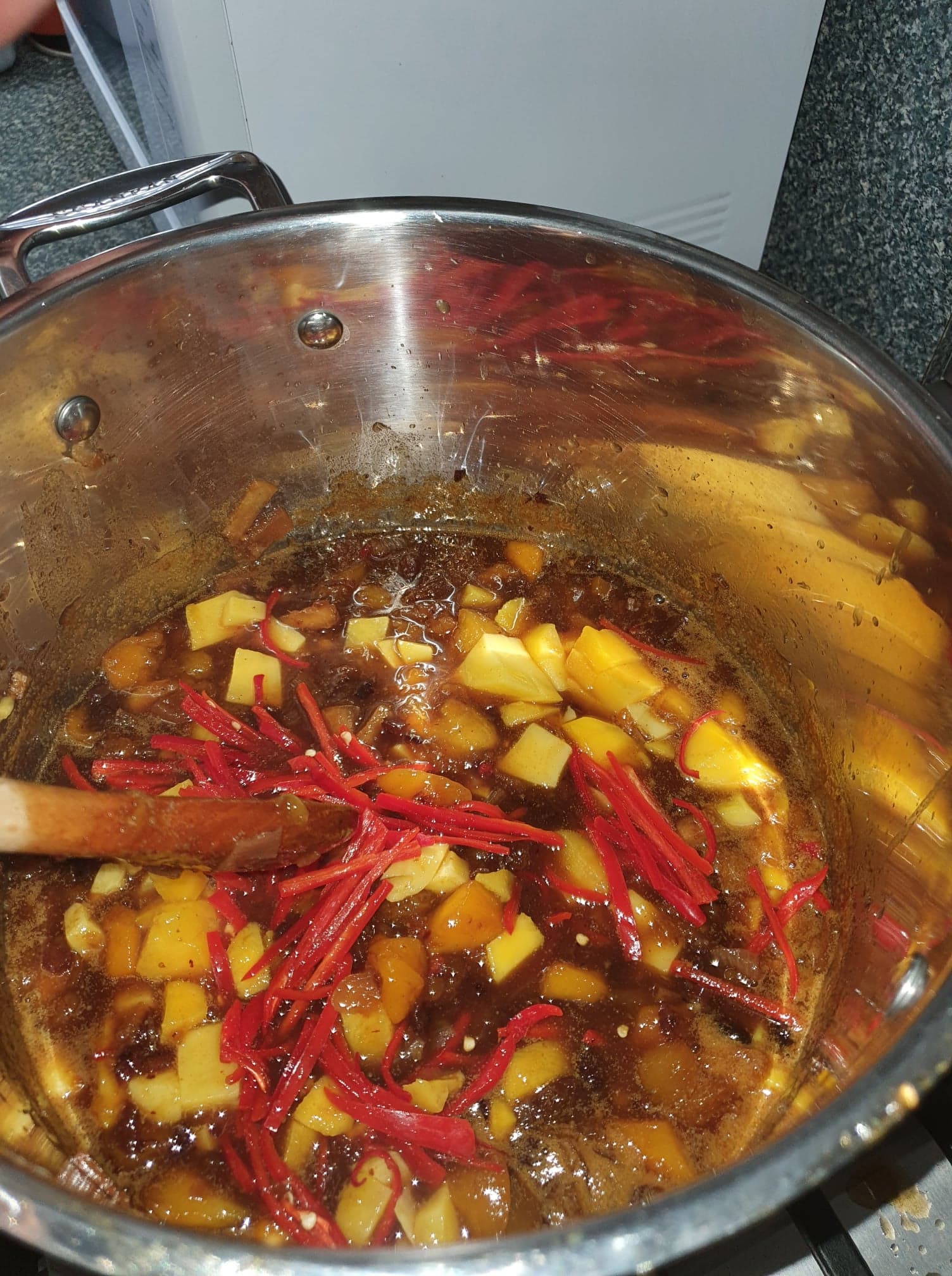
Step 3
Add salt to taste. Add the last ½ kg of just ripe Bowen or KP mangoes and the 6 sliced long red chillies
and cook for a further 30 minutes on low heat, stirring regularly to prevent sticking.
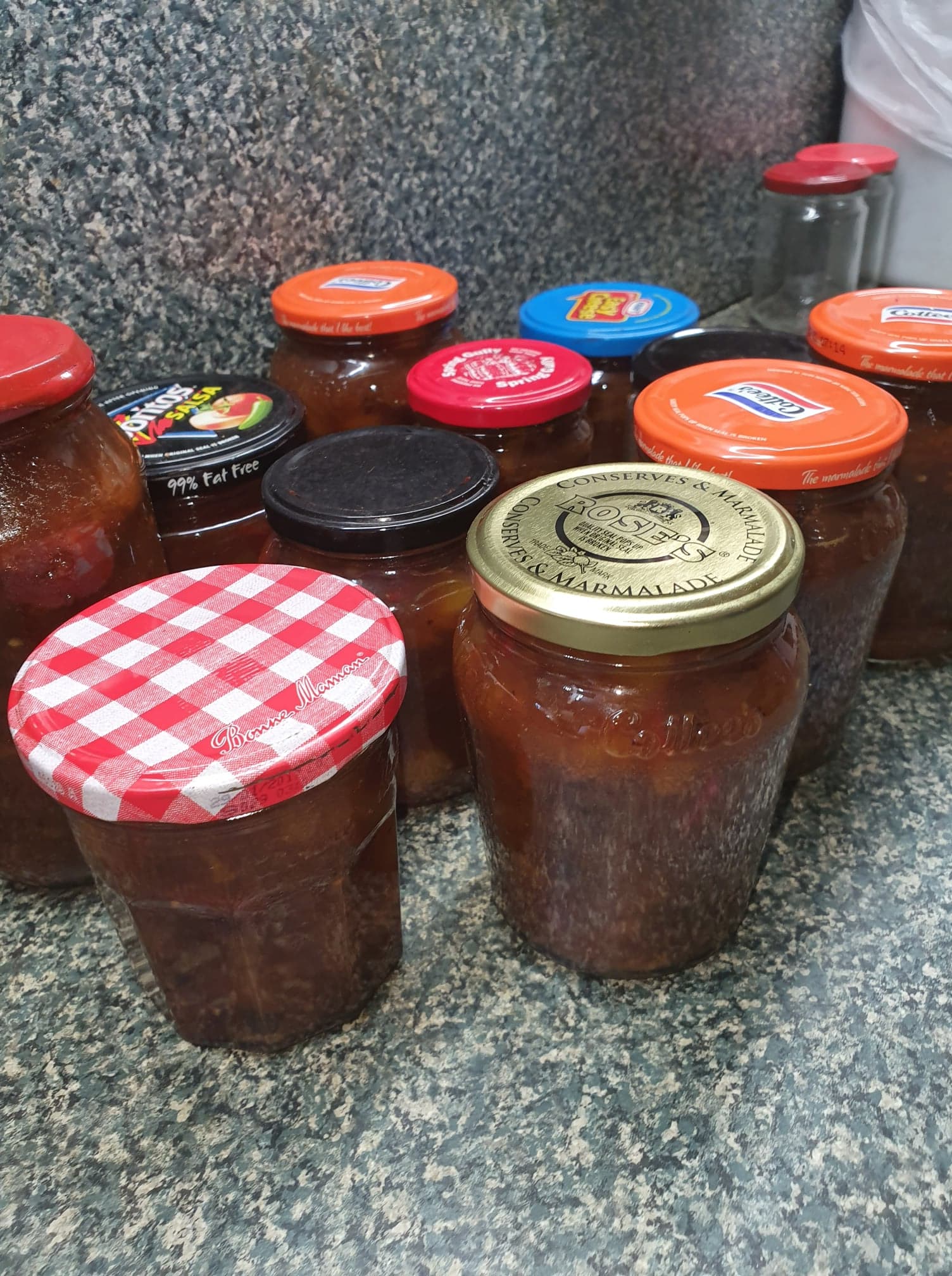
Step 4
Make sure the last of the mangoes added are fully cooked before bottling, otherwise you may experience
fermentation and growth on top of the chutney when opening a jar later. Bottle immediately and put tops
on the jars while the chutney is still hot, making sure that some of the long chillies and still yellow
mango cubes show on the outside of the jar for decorative presentation.
Additonal notes
- Will keep for 12 months unrefrigerated.
- Once opened refrigerate and use within 14 days.
- The chutney gets more mellow with age and it will lose some of it’s bite for tShe chilli.
- Be sure to label your finished chutney with the date of manufacture.
- Ensure the jars are thoroughly washed and dried before bottling.
Awards Won
- 1994 First prize, Royal North Australian Show Society (Inc), Royal Darwin Show
- 1995 First prize, Royal Darwin Show
- 1998 Second prize, Royal Darwin Show
- 1999 Third prize, Fred’s Pass Rural Show
- 2002 First prize, Royal Darwin Show
- 2004 First prize, Fred’s Pass Rural Show
Print this page
